
 Feedback
How to Use AI to Plan Maintenance Access Before Construction Starts
Posted by Best Access Doors on 31st Aug 2026
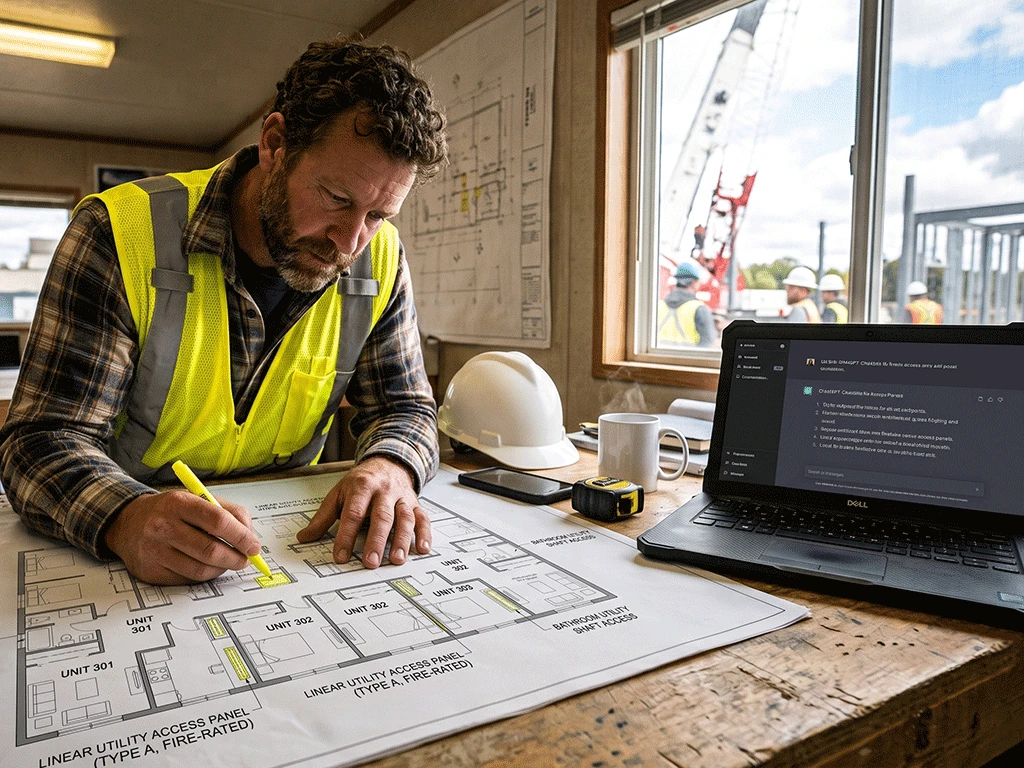
Maintenance access is one of the easiest things to miss during early construction planning.
When the focus is on layout, materials, schedule, and budget, planned service openings rarely make the short list. But once walls, ceilings, and finished surfaces are installed, a missing access point becomes an issue. Reaching concealed HVAC, plumbing, or life-safety systems without one can mean cutting into finished surfaces and reopening work nobody budgeted for.
Reviewing project notes with an AI tool before construction closes in helps identify where maintenance access planning is needed. AI can flag concealed systems that will need future service, organize potential access points by location, and list missing details for confirmation. This applies to HVAC access planning, plumbing, electrical, life-safety systems, and building envelope components.
What Are the Most Commonly Missed Maintenance Access Points?
Maintenance access is easiest to overlook when the project is focused on installation rather than future servicing. Once walls, ceilings, or floors are closed off, accessing important building systems can require demolition, make repairs difficult, and drive up costs.
Some of the most commonly missed maintenance access points include:
- Mechanical Equipment: Air handlers, dampers, valves, and HVAC controls often need regular inspections and servicing.
- Plumbing Systems: Shutoff valves, cleanouts, backflow preventers, and pumps should remain accessible for maintenance and repairs.
- Electrical Equipment: Junction boxes, control panels, disconnects, and communication equipment require safe access for inspection and troubleshooting.
- Life-Safety Systems: Fire dampers, sprinkler valves, and other life-safety components are typically subject to periodic inspection requirements.
- Building Envelope Components: Roof drains, roof hatches, attic spaces, and crawl spaces need safe access for routine inspections and maintenance.
These issues are especially common when multiple trades work independently or when equipment locations change during construction. A small coordination change early in the project can accidentally block future access if no one reviews the maintenance requirements.
How Can AI Help with Maintenance Access Planning?
AI can help contractors review project notes and flag systems that may need future access before construction closes in. Using AI for maintenance planning works best at this stage, while access points are still easy to add and the project team is still in planning mode. It can organize possible access points, identify missing details, and prepare better questions before framing and finishes move forward.
Reviewing Your Project Notes for Access Gaps
Most contractors already have the information needed to catch access gaps early. The challenge is that it is spread across site walk notes, supplier conversations, MEP coordination emails, and rough sketches.
You can paste those rough notes into an AI tool and ask it to identify systems that may need future maintenance access.
For example, your notes may say:
HVAC above ceiling. Plumbing valves behind wall. Electrical controls in corridor. Ceiling finish to be installed next week. Confirm access before drywall close-up.
Those notes give AI enough context to flag three potential access points, list the likely locations, and ask whether access has been planned for each one.
However, the output is not a final plan. It is a starting point that helps you see gaps before the project moves past the point where they are easy to fix.
Building a Checklist Before Coordination Meetings
AI can turn a rough list of flagged access points into a structured checklist you can bring to your next MEP coordination or pre-construction meeting.
Instead of relying on someone to raise the issue in the meeting, you arrive with a list of systems, possible locations, and open questions already organized. That makes it easier to confirm access needs with the right trades before framing and finishes move forward.
Catching an access gap in a coordination meeting costs nothing. Catching it after drywall is up costs time, money, and coordination across multiple trades.
Flagging Details that Still Need Confirmation
A good AI output does not guess at missing details. It marks them clearly so you know what still needs to be confirmed before a product is selected or an access location is finalized.
Details that AI should flag for confirmation include wall or ceiling application, rough opening size, fire-rating requirement, finish type, service frequency, and whether the location is in a public or restricted area. Those are the details that determine which access door or panel is right for the application, and they need to come from verified project information, not AI.
Copy/Paste Prompt: Maintenance Access Planning
Use this prompt when you need to identify possible access needs before construction is completed. Paste it into ChatGPT, Gemini, or any other AI tool, replace the bracketed section with your own project notes, and treat the output as a starting point to review with your project team.
Copy/Paste Prompt:
Act as a construction planning assistant. Review the project notes below and identify areas where maintenance access may be needed before construction is completed.
Look for access needs related to:
- HVAC
- plumbing
- electrical
- valves
- controls
- life-safety systems
- inspection points
- equipment requiring future service
- concealed systems behind walls or ceilings
For each possible access point, list:
- System requiring access
- Likely location
- Reason access may be needed
- Wall or ceiling application
- Access frequency
- Details to confirm
- Questions for the project team
- Whether an access door or an access panel may be needed
Do not make final product selections. If information is missing, mark it as "Needs confirmation."
Project notes:
[Paste notes here]
After running the prompt, review the output against your actual project drawings and notes before sharing it with the team or using it to drive product decisions.
What Can't AI Decide for You?
AI can help organize and prepare, but it should not make final decisions about product selection, fire-rating requirements, or code compliance. Those calls still require verified project information, official documents, and, where applicable, confirmation from the authority having jurisdiction.
Fire-Rated Assemblies Need Manual Verification
If an access point is in a fire-rated wall or ceiling, do not rely on AI to confirm what product is approved for that assembly. AI cannot review the actual wall or ceiling construction, the required rating, the installation method, or the local approval process.
A more useful approach is to ask AI what details you need to confirm rather than asking it to approve a product. For example:
What details should I confirm before choosing a fire-rated access door for this project?
That kind of prompt keeps AI in the right role. It helps you prepare questions about wall or ceiling applications, required ratings, rough opening sizes, label requirements, submittals, and AHJ confirmation without asking AI to make a call it is not qualified to make. Always verify fire-rated product requirements against official submittals, manufacturer documentation, and your project authority.
Final Product Selection Still Requires Project Details
Before any access door or panel is selected, the actual project details need to be confirmed. This includes rough opening size, wall or ceiling application, finish type, indoor or outdoor location, moisture or wash-down exposure, service frequency, and any lock or security requirements.
AI can help organize these details into a checklist, but the final product decision should be based on verified information. If you need help matching the right access door to a specific application, the Best Access Doors team can review your project details and help you identify the right options.
Final Thoughts
Planning maintenance access is significantly easier and less expensive before construction closes in than after. AI can help contractors save time and catch access gaps early by reviewing project notes, flagging systems that need future service, and generating a checklist of details to confirm before walls, ceilings, or floors are finished.
Whether you are working on access planning for commercial buildings, a renovation, or a retrofit project, the same principle applies: plan the access before the surfaces close, not after a technician cannot reach something.
Use AI to create the first checklist, then confirm the details with the project team, drawings, specifications, and supplier documents before making any product decisions.
Browse Access Doors for Your Next Project
Planning maintenance access for a commercial building, renovation, or retrofit project?
Browse access doors and panels from Best Access Doors to compare options for wall access, ceiling access, fire-rated applications, stainless steel needs, custom-size openings, and maintenance access points.